
Table of Contents
Are you ready to dive into the sweet world of sugar? As a seasoned baker, I know that understanding the different types of sugar is crucial for achieving the perfect texture, flavor, and appearance in your desserts.
From delicate meringues to chewy cookies, the type of sugar you choose can make all the difference. Let’s explore the wonderful world of sugar together, so you can confidently create delicious treats that will impress your friends and family.
To start, you could try some basic recipes to get a feel for the different sugars. Check out some beginner recipes here.
Granulated Sugar (White Sugar)
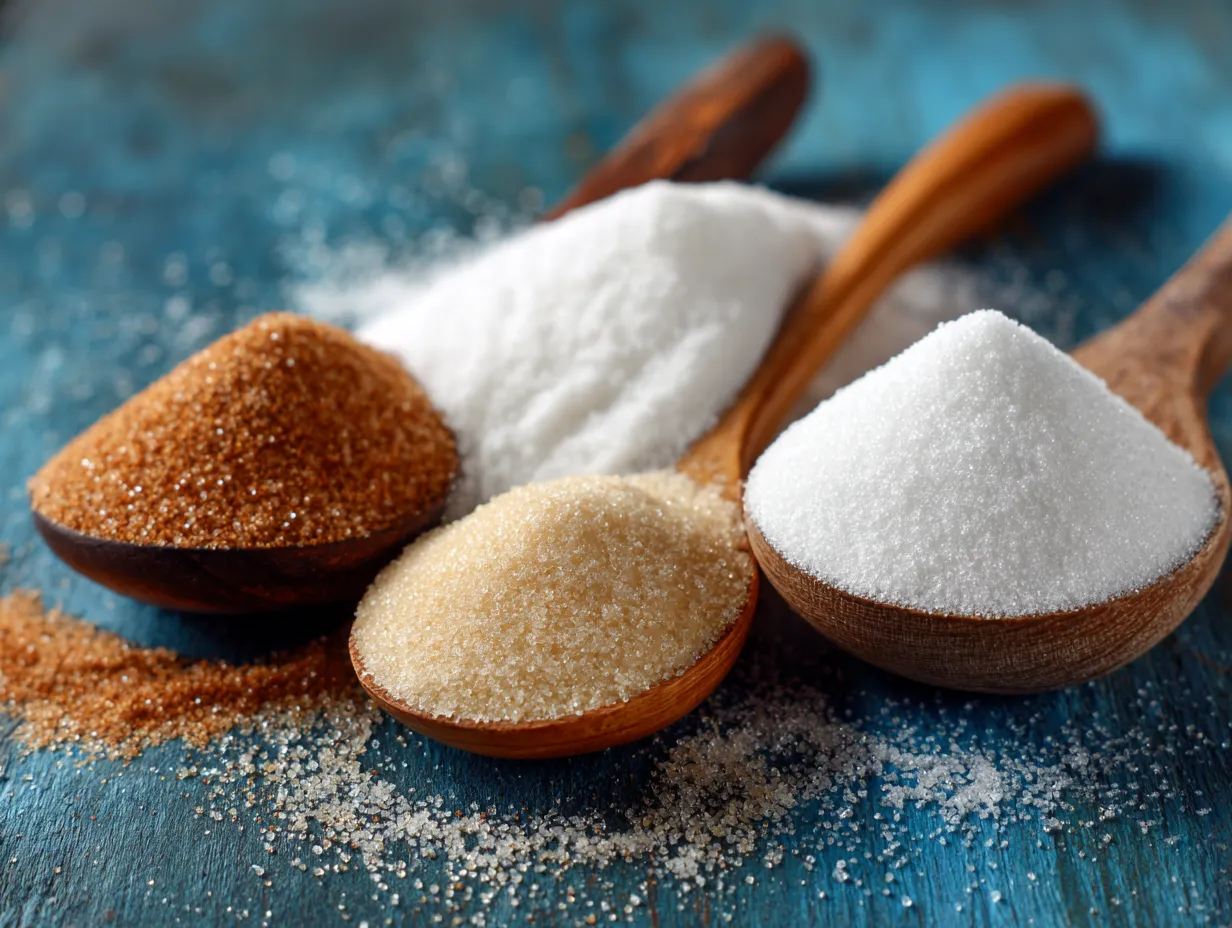
Granulated sugar, also known as white sugar, is the most common type of sugar found in baking. It’s made from either sugarcane or sugar beets. The sugar crystals are relatively uniform in size, making it a versatile ingredient for various baked goods. You’ll find it in almost every recipe, from cakes and cookies to pies and pastries.
Uses: Granulated sugar is perfect for sweetening and adding structure to your baked goods. It dissolves easily in liquids, which makes it great for batters and doughs. It also helps with browning and caramelization, giving your treats that beautiful golden color and rich flavor.
Tips: When measuring granulated sugar, be sure to level off the top of the measuring cup. Packing the sugar down can lead to too much sweetness and can affect the final texture of your baked goods. For a finer texture in your cakes, you can pulse granulated sugar in a food processor for a few seconds to make it a bit finer.
Mistakes to Avoid: Don’t substitute granulated sugar with other types of sugar without adjusting the recipe. Each type has different properties that will impact the final product.
Over-mixing can also be an issue when using granulated sugar, as it can cause gluten development in your baked goods, resulting in a tougher texture. Explore some recipes using granulated sugar by searching here.
Powdered Sugar (Confectioners’ Sugar)
Powdered sugar, also known as confectioners’ sugar or icing sugar, is granulated sugar that has been ground into a fine powder. It usually contains a small amount of cornstarch to prevent clumping. This type of sugar is ideal for delicate desserts and frostings.
Uses: Powdered sugar is essential for making smooth icings, glazes, and dusting desserts. It dissolves quickly, which makes it perfect for creating a light and airy texture in meringues and whipped cream. It’s also used in some cookie recipes to create a tender crumb.
Tips: When measuring powdered sugar, sift it first to remove any lumps and ensure a smooth texture. If you don’t have a sifter, you can use a fine-mesh sieve. Be careful not to over-mix frostings made with powdered sugar, as this can make them stiff and dry.
Mistakes to Avoid: Don’t substitute powdered sugar for granulated sugar without adjusting the recipe, as it will affect the texture and sweetness of your baked goods. Also, be mindful of humidity, as powdered sugar can absorb moisture and clump. Store it in an airtight container in a dry place.
Brown Sugar
Brown sugar is granulated sugar with molasses added. The molasses gives it a distinctive flavor and adds moisture. You can find it in light and dark varieties, with dark brown sugar having a stronger molasses flavor.
Uses: Brown sugar is perfect for adding a rich, caramel-like flavor and chewy texture to cookies, cakes, and other baked goods. It’s also great for making sauces and glazes. The molasses in brown sugar helps retain moisture, which results in softer baked goods.
Tips: Store brown sugar in an airtight container to prevent it from drying out and hardening. If your brown sugar does harden, you can soften it by placing a slice of bread or a damp paper towel in the container with the sugar. For precise measurements, pack the brown sugar firmly into the measuring cup.
Mistakes to Avoid: Ensure your brown sugar is fresh. Old or dried-out brown sugar will not perform as well in recipes. Avoid over-baking recipes that use brown sugar, as it can make them too dry and hard. Be mindful of the type of brown sugar called for in the recipe, as light and dark brown sugar can yield different results.
Other Types of Sugar
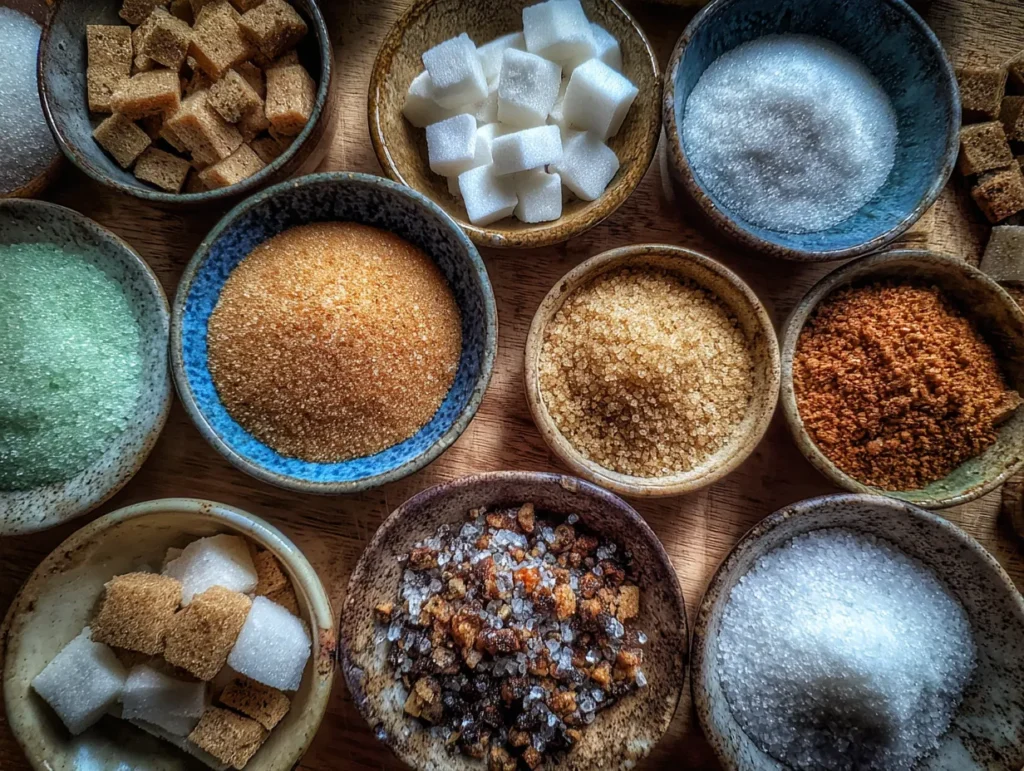
Beyond the basics, there are other types of sugar that can add unique flavors and textures to your baking:
- Caster Sugar: Also known as superfine sugar, caster sugar is finely ground granulated sugar. It dissolves quickly and is perfect for meringues, mousses, and delicate cakes.
- Turbinado Sugar: This is a raw sugar with large, coarse crystals. It has a light molasses flavor and is often used for topping muffins and cookies.
- Demerara Sugar: Similar to turbinado sugar, demerara sugar has large, golden crystals and a rich molasses flavor. It’s great for adding a crunchy topping to baked goods.
- Muscovado Sugar: This is an unrefined sugar with a high molasses content. It has a very dark color and a strong molasses flavor. It’s excellent for making gingerbread and other intensely flavored treats.
- Coconut Sugar: Made from the sap of coconut palm trees, coconut sugar has a caramel-like flavor and can be used as a substitute for granulated sugar.
- Honey: While not a sugar in the same form, honey is a natural sweetener that can be used in baking. It adds moisture and a unique flavor.
- Maple Syrup: Like honey, maple syrup is a liquid sweetener that can be used to add flavor and moisture to baked goods.
Tips: When substituting alternative sugars, such as coconut sugar or honey, adjust the amount of liquid in the recipe, as they can have different moisture contents.
Always consider the flavor profile of the sugar and how it will complement the other ingredients in your recipe. Experiment with different types of sugar to discover new flavor combinations.
Mistakes to Avoid: When using alternative sugars, be mindful of their impact on the texture and browning of your baked goods. Some sugars brown more quickly than others. Some sugars can also affect the rise of your baked goods.
It’s always best to follow the recipe closely and only make slight adjustments to accommodate your preferences and available ingredients.
Sugar and Baking Chemistry
Understanding the science behind sugar’s role in baking can significantly improve your results. Sugar plays several crucial roles:
- Sweetening: Sugar provides the sweetness that we all crave in our desserts. Different types of sugar have varying levels of sweetness, so it’s essential to understand their impact on the overall flavor of your baked goods.
- Moisture Retention: Sugar attracts and retains moisture, which helps keep baked goods soft and prevents them from drying out. This is especially true of brown sugar, which contains molasses.
- Tenderizing: Sugar interferes with gluten development, which results in a more tender crumb. This is why sugar is often used in cakes and cookies to create a delicate texture.
- Browning: Sugar caramelizes when heated, which gives baked goods their characteristic golden-brown color and adds depth of flavor. This process is known as the Maillard reaction.
- Leavening: Sugar can help with leavening, especially in recipes that use yeast. Sugar provides food for the yeast, which produces carbon dioxide, causing the baked goods to rise.
Tips: Experiment with different ratios of sugar to other ingredients to see how it affects the final product. For example, reducing the sugar in a cookie recipe can result in a flatter, crispier cookie. For a softer cake, you might increase the amount of sugar slightly. Use a kitchen scale to measure your ingredients for the most accurate results.
Mistakes to Avoid: Be aware of the impact of sugar on the texture and appearance of your baked goods. Too much sugar can make cakes and cookies overly sweet and can also affect their structure. Not enough sugar can result in a dry, dense product. Always follow the recipe instructions carefully and make adjustments based on the specific type of sugar being used.
Substitutions and Adjustments
Sometimes you may need to substitute one type of sugar for another due to dietary restrictions, ingredient availability, or personal preference. Here are some tips for successful substitutions:
- Granulated Sugar: Can be substituted with caster sugar in most recipes. You can also use coconut sugar, but be aware that it has a slightly different flavor.
- Powdered Sugar: Cannot be easily substituted with other types of sugar due to its fine texture. If you need a substitute in a pinch, you can pulse granulated sugar in a food processor until it reaches a powdered consistency.
- Brown Sugar: Can be made by combining granulated sugar with molasses. The ratio is typically one tablespoon of molasses per cup of granulated sugar.
- Honey or Maple Syrup: These liquid sweeteners can be used as a substitute for granulated sugar, but you’ll need to reduce the amount of liquid in the recipe and possibly add a bit of flour to adjust the texture.
- Sugar Alcohols: Alternatives like erythritol or xylitol can be used, but they may have a cooling effect. Adjust the sweetness level to your preference.
Tips: When making substitutions, start with a small adjustment and taste the batter or dough to see if it meets your expectations. Be prepared to make further adjustments as needed.
Consider the impact of the substitute on the texture, flavor, and browning of your baked goods. Always read the entire recipe before making substitutions to understand how the sugar functions in the recipe.
Mistakes to Avoid: Don’t make drastic substitutions without understanding the impact on the final product. Substituting a liquid sweetener for a granulated sugar without adjusting the liquid content of the recipe can result in a batter that is too wet.
Avoid using substitutions that have a significantly different flavor profile without considering how it will affect the overall taste of the dessert. Always test your substitutions before baking a large batch.
Conclusion for Types of Sugar in Baking
Congratulations, you’ve now got a solid understanding of the different types of sugar in baking! From the workhorse granulated sugar to the more specialized varieties like muscovado and coconut sugar, each type brings its unique characteristics to the table.
Armed with this knowledge, you can now experiment with confidence, creating a wide range of delicious desserts that will surely impress. Remember, baking is all about precision and practice, so don’t be afraid to try new things and have fun in the kitchen. Happy baking!
FAQ of Types of Sugar in Baking
Here are some frequently asked questions about sugar in baking:
- Can I use a sugar substitute in my baking? Yes, you can. However, sugar substitutes often have different properties than sugar, so you may need to adjust the other ingredients in your recipe. For example, some sugar substitutes don’t brown in the same way as sugar, so your baked goods may not have the same color. It’s best to research your chosen substitute and find recipes specifically designed for it.
- How do I prevent my brown sugar from hardening? The best way to prevent brown sugar from hardening is to store it in an airtight container. You can also add a brown sugar saver, which helps maintain the moisture content. If your brown sugar does harden, you can soften it by placing a slice of bread or a damp paper towel in the container with the sugar.
- Why is my frosting grainy when using powdered sugar? Your frosting may be grainy because the powdered sugar wasn’t sifted, or it may have absorbed too much moisture. Always sift your powdered sugar before using it, and store it in an airtight container in a dry place. You can also add a small amount of liquid, like milk or cream, to help smooth out the frosting.
- What is the difference between light and dark brown sugar? Light brown sugar has a milder molasses flavor, while dark brown sugar has a more intense molasses flavor. Dark brown sugar is often used in recipes where a strong molasses flavor is desired, such as gingerbread and molasses cookies. Light brown sugar is more versatile and can be used in a wider variety of recipes.
- Can I make my own powdered sugar? Yes, you can make your own powdered sugar by grinding granulated sugar in a high-speed blender or food processor. Add a teaspoon of cornstarch per cup of granulated sugar to prevent clumping. Be sure to sift the mixture before using it in your recipes.

11 thoughts on “7 Types of Sugar in Baking: Quick Guide for Beginners”